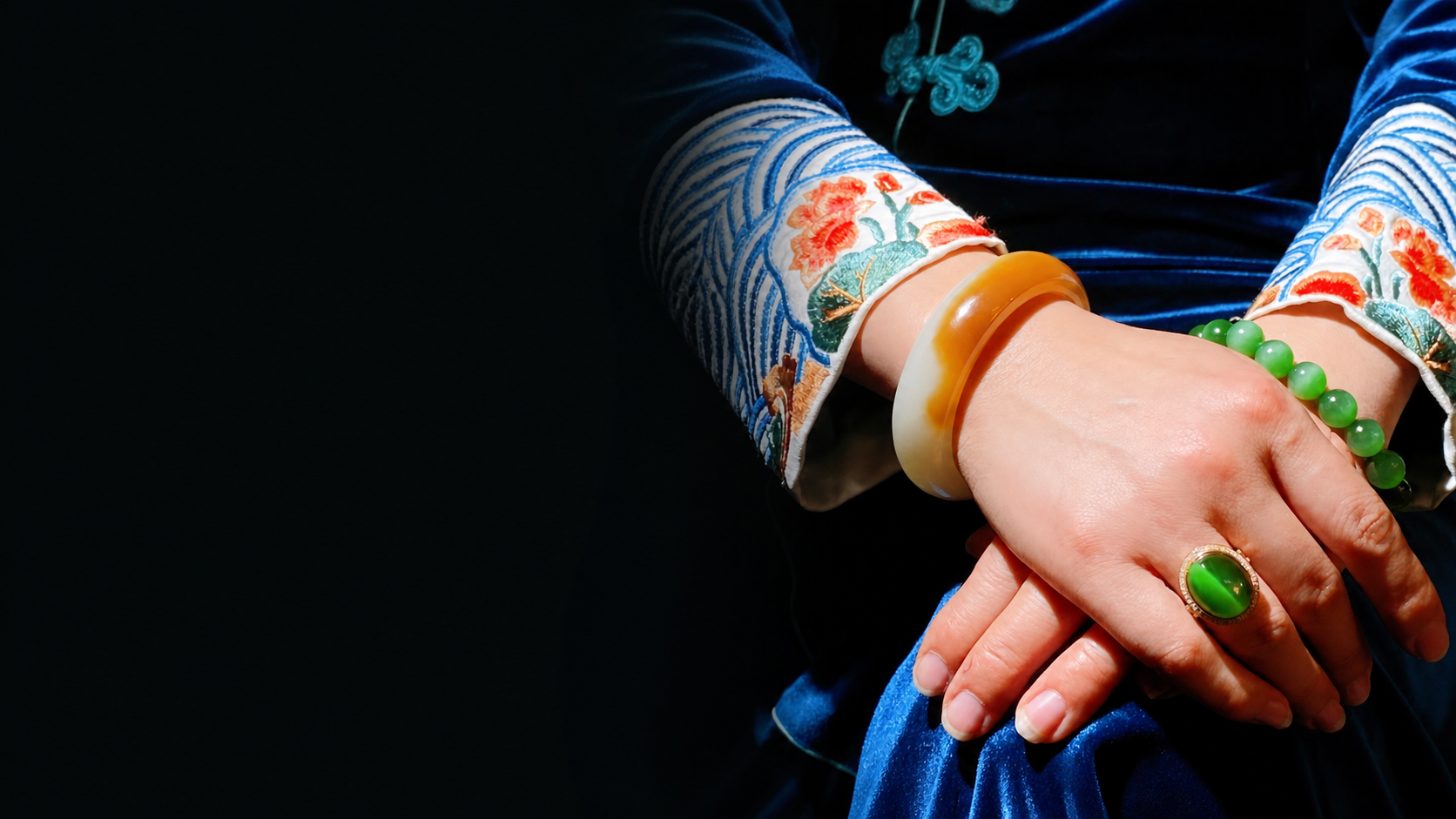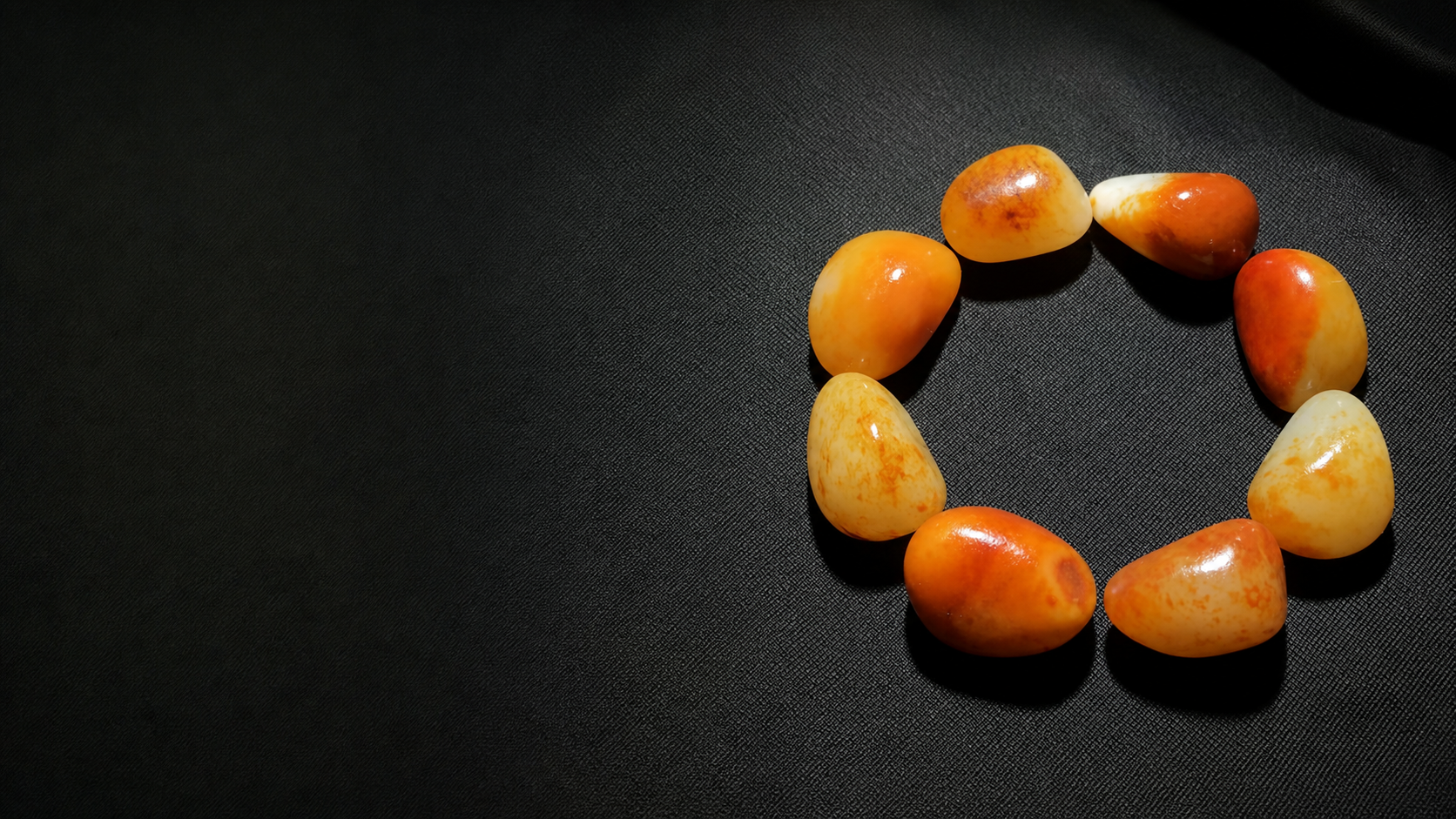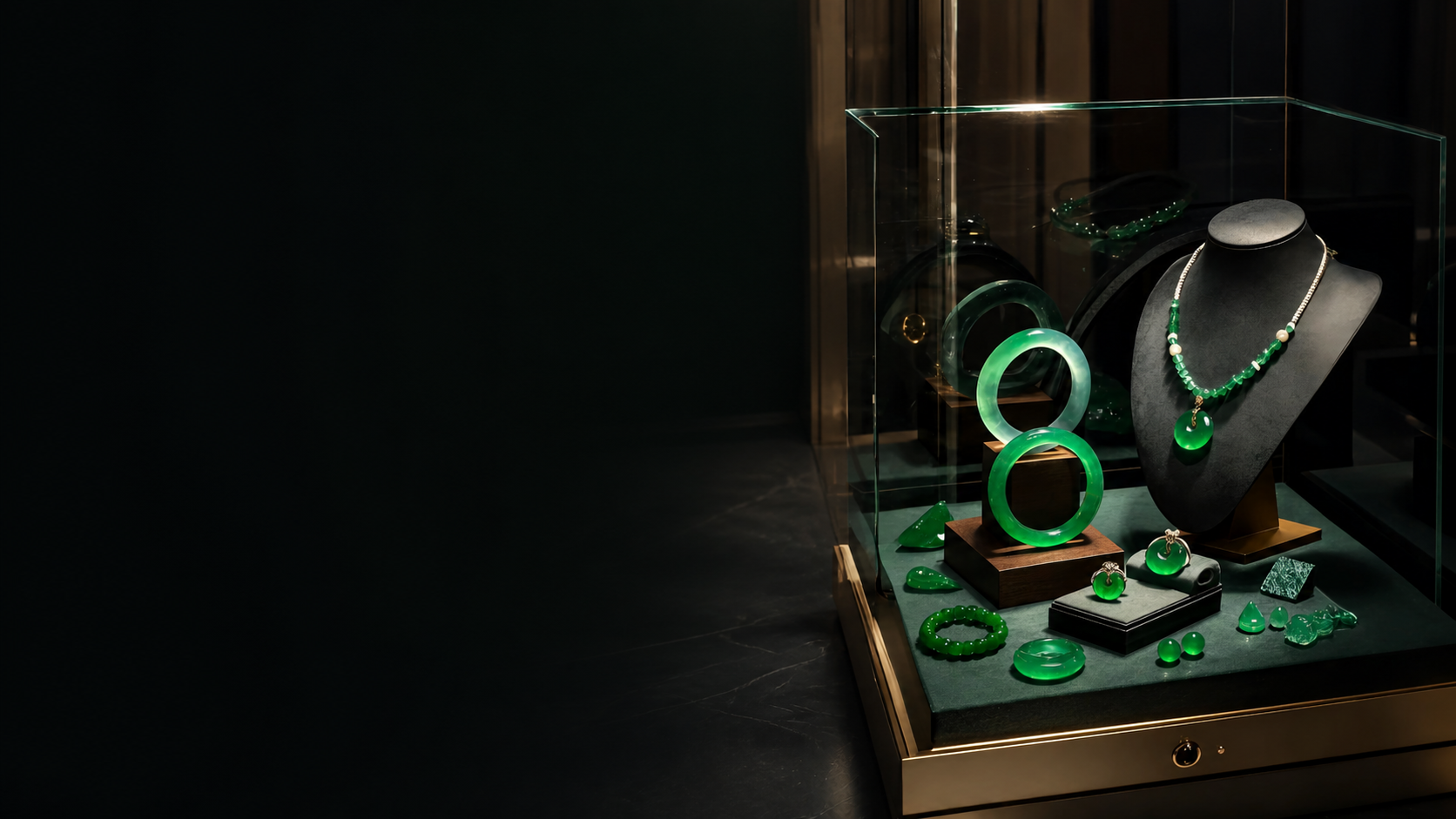
Jade is one of the oldest and most respected natural treasures in Chinese culture. For thousands of years, it has been used for jewelry, carvings, ornaments, ritual objects, and objects of personal meaning. Yet for many people outside China, the word “jade” can be confusing. Many different stones are sold as “jade,” while their materials, origins, qualities, and values can be very different.
For anyone who wants to understand jade or begin collecting it, the first step is to understand what jade really is.
At Hermit Jade, we take a clear view. In the world of true jade, there are two great types: jadeite and nephrite. Jadeite jade is a pyroxene-rich jade material, while nephrite jade is an amphibole-rich jade material. Both are made of tightly interlocking microscopic crystals, which gives jade its famous toughness. They are different materials, with different histories, appearances, sources, and collecting traditions. The finest examples of both can be extremely rare and valuable, combining natural beauty with human craftsmanship.
Jadeite — The Rare and Brilliant Side of Jade
Jadeite is best known today through fine jadeite from Myanmar, which has been highly prized in China for centuries and has become one of the world's most valuable jade materials.
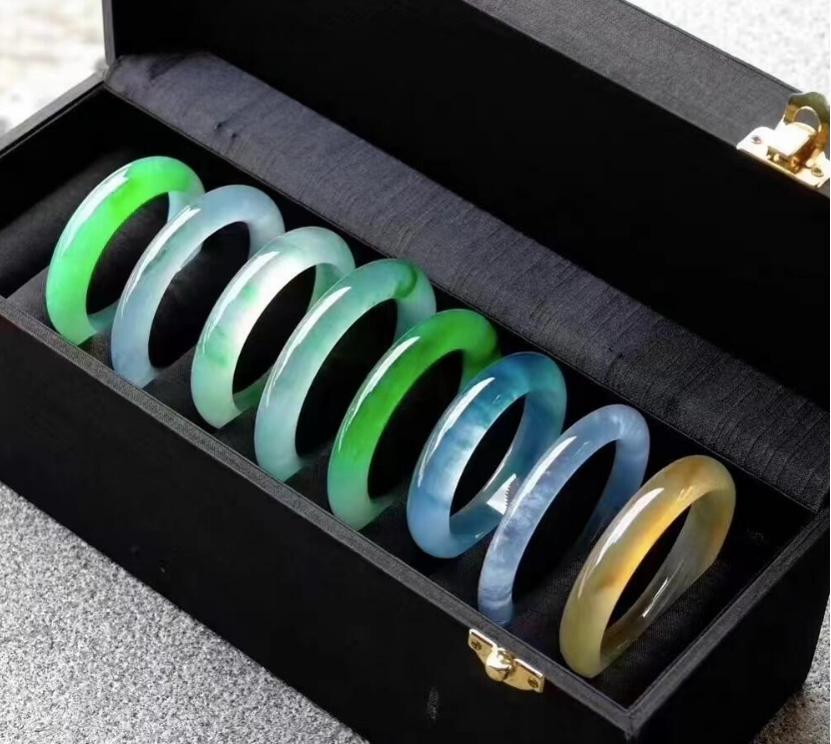
Jadeite can occur in many colors, including green, lavender, white, yellow, orange, black, and others. Among all these colors, fine green jadeite remains the most sought-after, especially vivid, highly translucent green. But the finest jadeite is not simply about color. Collectors look at the complete combination of color, transparency, texture, structure, light performance, clarity and absence of flaws, size and proportions, as well as craftsmanship.
Exceptional jadeite is very rare. A large piece of rough jadeite may contain only a tiny amount of truly fine material, or none at all. This scarcity has helped fine jadeite develop a strong collector and auction market internationally.
For serious collectors, the finest jadeite is therefore more than jewelry. It is a rare natural material of deep charm that can also become a work of art and a collectible asset.
Jadeite and Nephrite: Two Different Collecting Worlds
Jadeite and nephrite should not simply be viewed as “better” or “worse” versions of each other. They offer two very different experiences for collectors. A serious collector can appreciate both. Fine jadeite may attract you with its color and light, while fine nephrite may draw you in through its texture, warmth, and sense of history. They are different, but both belong to the world of jade.
| Jadeite | Nephrite | |
|---|---|---|
| Main character | Color, translucency, light | Texture, warmth, material character |
| Best-known source | Myanmar | China, Russia, and other regions |
| Chinese tradition | Particularly important in Chinese luxury jade culture from the Qing period onward | Thousands of years of Chinese jade culture |
| Famous colors | Imperial green, lavender, white, etc. | White, green, mutton-fat white, celadon, black, etc. |
| Collector focus | Color, transparency, texture, structure, rarity | Texture, density, oiliness, color, natural character, craftsmanship, provenance |
| Market character | Strong luxury jewelry and auction market | Strong cultural, artistic, and collector market |
| Ultimate attraction | Rare visual beauty, translucency, and scarcity | Material character, history, and individuality |
What About Other Stones Called “Jade”?
This is where buyers need to be careful.
Many other stones may be sold as “jade” because they look similar or have traditionally been used for carvings. But looking like jade does not make a material jade. Materials such as serpentine, quartzite, and other ornamental stones can be beautiful in their own right, but they are not the same materials as jadeite or nephrite. For serious collectors, authenticity is the beginning.
Jadeite Terminology — 翡翠
A note for collectors: Chinese jade has its own language. Many terms used by Chinese collectors do not have a perfect one-word equivalent in English. Some describe a material quality, some describe appearance, and others describe traditional forms or characteristics that experienced collectors understand almost intuitively.
This guide explains some of the most commonly used terms you may encounter when viewing or discussing jade with Chinese collectors and dealers.
A. 种水 — Material, Texture & Transparency
种 (Zhong)
Zhong refers broadly to the quality and structure of jadeite material. It is not simply “transparency.” It reflects the fineness, compactness, texture, and overall quality of the jadeite.
Common terms include:
- 玻璃种 (Bōlí Zhǒng) — Glassy / Glass-like. Extremely fine and clear-looking jadeite with high transparency and a clean, crisp appearance.
- 高冰种 (Gāo Bīng Zhǒng) — High Icy. Highly translucent to transparent jadeite with a bright, clean appearance and strong light transmission.
- 冰种 (Bīng Zhǒng) — Icy. Translucent jadeite with an appearance often compared to clear ice. It may show a cool, clean light quality.
- 糯种 (Nuò Zhǒng) — Glutinous / Waxy. A softer-looking material with lower transparency and a smooth, creamy visual quality.
- 糯冰种 (Nuò Bīng Zhǒng) — Waxy-Icy. Between glutinous and icy in appearance, combining a soft texture with relatively good translucency.
These terms are commonly used in the Chinese jade market, but they are market terminology rather than standardized gemological grades.
水头 (Shuǐtóu) — Water / Transparency
Shuitou describes the apparent transparency and depth of light in jadeite.
A jadeite piece with good 水头 appears more lively and luminous, with light seeming to travel into the stone rather than simply reflecting from the surface.
种水 (Zhǒngshuǐ)
Zhongshui refers to the overall combination of material quality and transparency/light performance.
In Chinese jade collecting, 种水 is often discussed together because the quality of the material and its transparency work together to create the visual character of jadeite.
刚性 (Gāngxìng) — Crispness / “Steel-like” Quality
Gangxing describes a particularly crisp, firm, clean visual quality often seen in fine jadeite.
It can give the stone a sharp, strong inner light and a sense of structural compactness.
荧光 / 荧光感 (Yíngguāng / Yíngguāng Gǎn) — Glow
A visual quality in which light appears to radiate or glow from within the jadeite.
This is different from fluorescence under ultraviolet light. In Chinese jade terminology, 荧光感 usually describes a visual effect seen under normal lighting.
起胶 (Qǐjiāo) — Gel-like Glow
Qijiao describes a soft, cohesive, gel-like visual quality in fine jadeite, where the material appears smooth, rich, and almost gelatinous under light.
起莹 (Qǐyíng) — Inner Glow
Qiying describes a luminous effect in which the jadeite appears to have light coming from within the material.
B. 翡翠颜色 — Jadeite Color
帝王绿 (Dìwáng Lǜ) — Imperial Green
The most famous high-end green jadeite color. It refers to a vivid, rich, highly desirable green with strong saturation and an attractive balance of tone and brightness.
阳绿 (Yáng Lǜ) — Bright Green
A fresh, bright green with strong visual energy and a lively appearance.
苹果绿 (Píngguǒ Lǜ) — Apple Green
A fresh green reminiscent of the color of a green apple.
菠菜绿 (Bōcài Lǜ) — Spinach Green
A deeper, darker green, traditionally compared to spinach.
紫罗兰 (Zǐluólán) — Lavender
Lavender-colored jadeite, ranging from pale violet to richer purple tones.
春带彩 (Chūn Dài Cǎi)
Jadeite showing both green and lavender/purple in the same piece.
黄翡 (Huáng Fěi) — Yellow Jadeite
Yellow jadeite, ranging from pale yellow to rich golden tones.
红翡 (Hóng Fěi) — Red Jadeite
Red or reddish-orange jadeite.
墨翠 (Mòcuì) — Black Jadeite / Ink Jadeite
Very dark green jadeite that may appear black in ordinary light but can reveal green tones when strong light passes through it.
C. 翡翠器型 — Jadeite Forms
手镯 (Shǒuzhuó) — Bangle
One of the most important forms in jadeite collecting. A complete bangle is carved from a single piece of rough jadeite.
平安扣 (Píng'ān Kòu) — Ping An Kou / Chinese Peace Pendant
A simple circular pendant with a central opening. Traditionally associated with peace, safety, harmony, and protection.
无事牌 (Wúshì Pái) — Wushi Pai / Plain Plaque
A simple, usually undecorated jade plaque. Its beauty depends strongly on the quality and character of the jade material itself.
蛋面 (Dànmiàn) — Cabochon
A polished, rounded jadeite gem, usually with a domed surface. Cabochons are particularly important in high-end jadeite jewelry.
戒面 (Jièmiàn) — Ring Stone
A jadeite piece intended to be mounted as a ring stone, often a cabochon or oval-shaped gem.
珠链 / 手串 (Zhūliàn / Shǒuchuàn) — Bead Necklace / Bead Bracelet
Jewelry made from multiple polished jadeite beads. High-quality matching strands require consistency in color, texture, transparency, size, and overall appearance.
挂件 (Guàjiàn) — Pendant
A jadeite piece designed to be worn as a pendant. It may be plain, shaped, or carved with a traditional subject.
雕件 (Diāojiàn) — Carved Piece
A jadeite piece shaped or carved into a subject, such as Guanyin, Buddha, dragon, phoenix, leaf, gourd, or landscape.