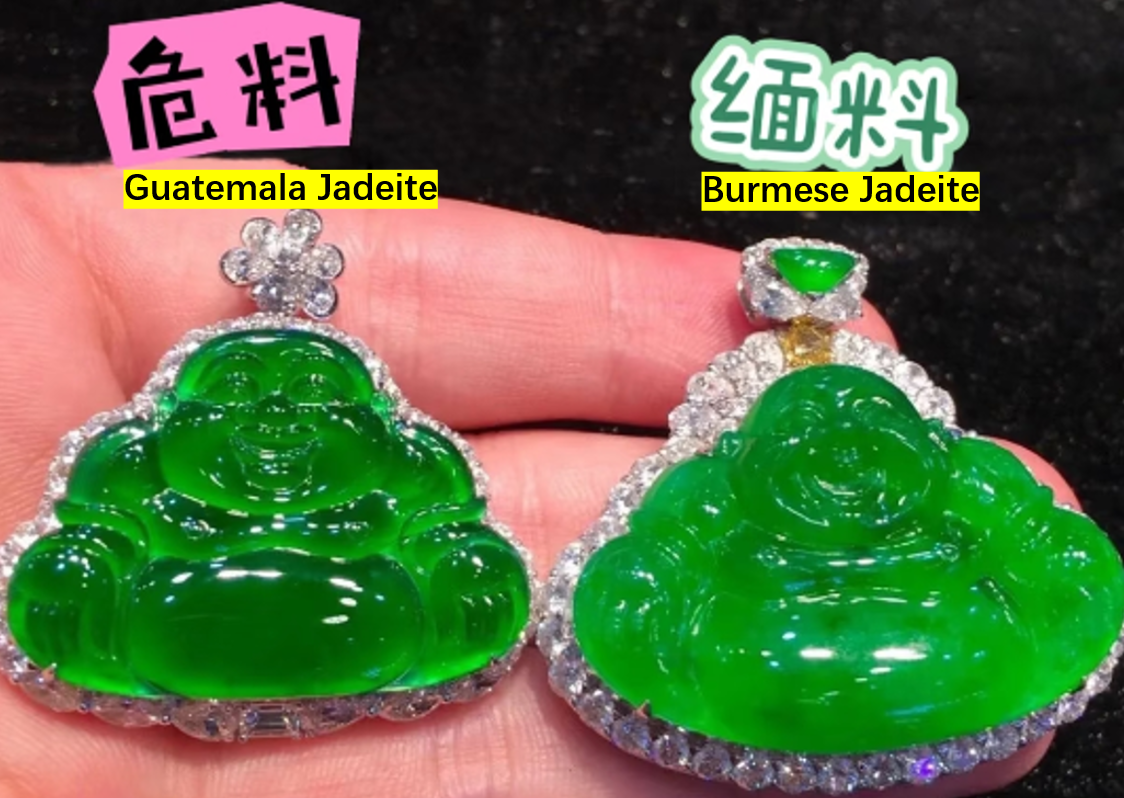
For collectors and buyers, whether a jadeite comes from Burmese or Guatemala can influence not only its appearance, but also its rarity and value. This is especially true when you are looking at luxury jadeite jewelry, premium jadeite, or pieces considered investment grade jade and collectible jade jewelry.
So what sets Burmese jadeite apart from Guatemala jadeite? And how can you tell the difference?
For most buyers, it is not easy to distinguish the origin. In this blog, we’ve summarized the six most important ways to identify jadeite origin in practice:
1. Color Tone: Warm vs. Cool (most important way to observe)
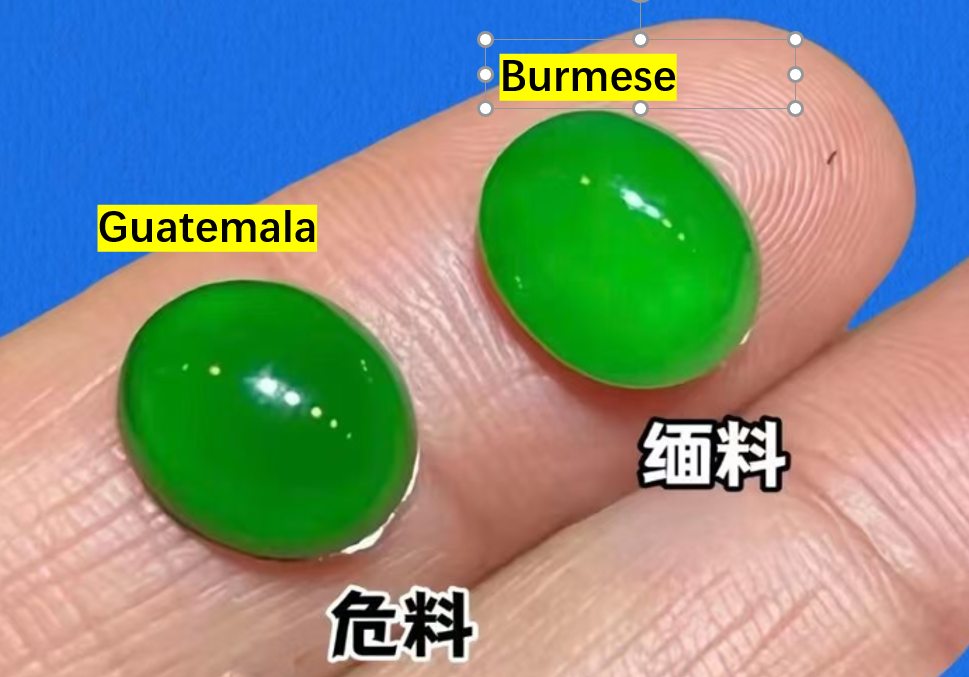
High-quality Burmese jadeite typically displays a warm, vibrant undertone. Even in deeper color such as imperial green, it appears rich and lively with a clean, bright base. Guatemala jadeite, by contrast, tends to appear cooler in tone. Its green often carries subtle bluish or grayish undertones.
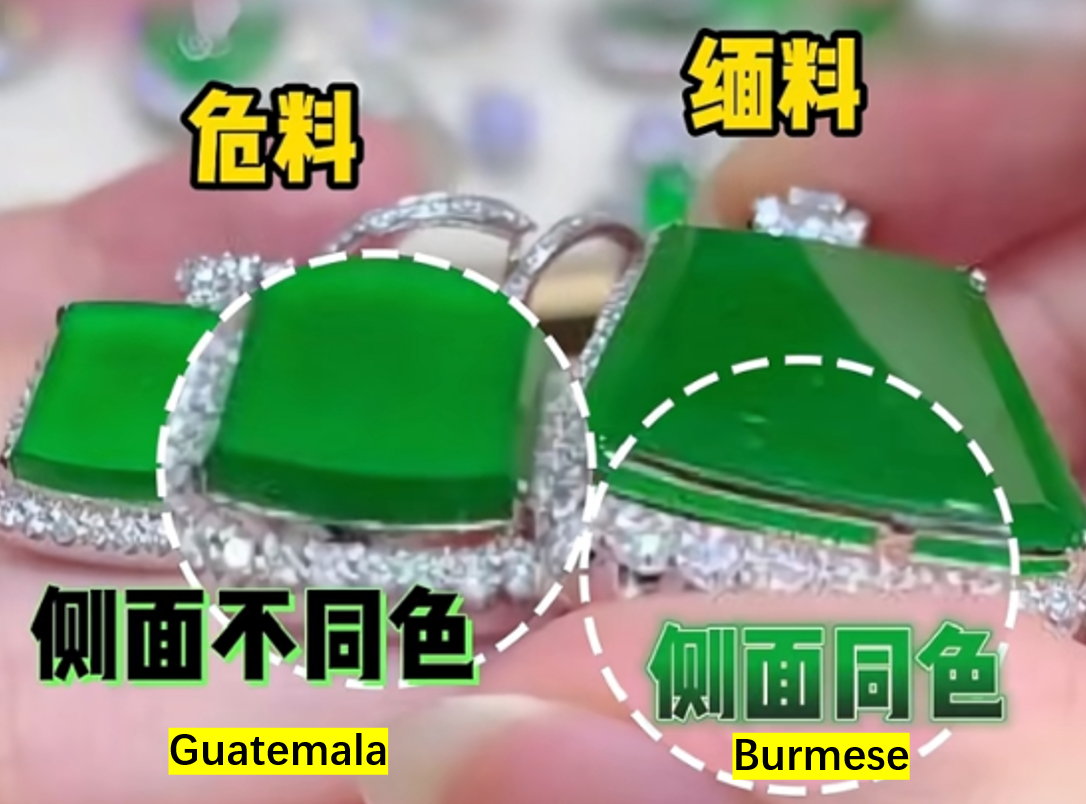
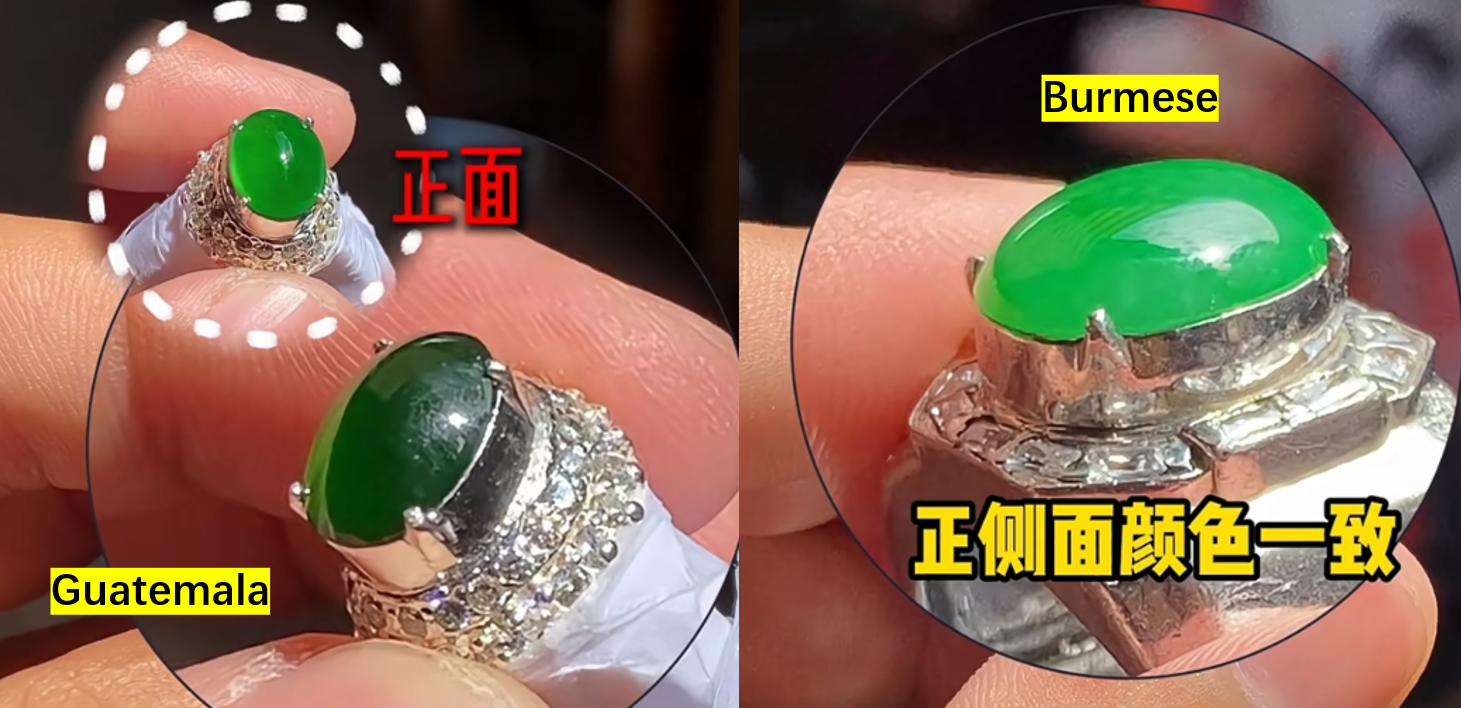
The difference appears more obvious when the stone is rotated to the side: Burmese jadeite generally maintains its color strength, but Guatemala jadeite often becomes darker and less vibrant when observed from the side, and may show a blue-gray cast or a loss of saturation.
How to observe:Place the stone under natural daylight. Burmese jadeite will typically appear brighter and warmer, while Guatemala jadeite often looks cooler, darker, and less saturated. Then rotate the stone—pay attention to whether the side color remains stable or becomes darker and duller.
2. Light Performance: “Living Light” vs. Flat Reflection
High-quality Burmese jadeite is known for the “living light.” Light enters the stone, diffuses, and returns softly. As the piece is rotated, the glow appears to move—fluid, dynamic, and almost water-like.
Guatemala jadeite in comparison, tends to show stronger surface reflection. The light often appears more static, lacking the same depth and internal movement.
How to observe:Hold the jade near a window and rotate it slowly. If the light seems to move from within the stone, this is an indicator of Burmese jadeite. If the effect feels more from the surface instead of flowing through it, it may be Guatemala material.
3. Thickness
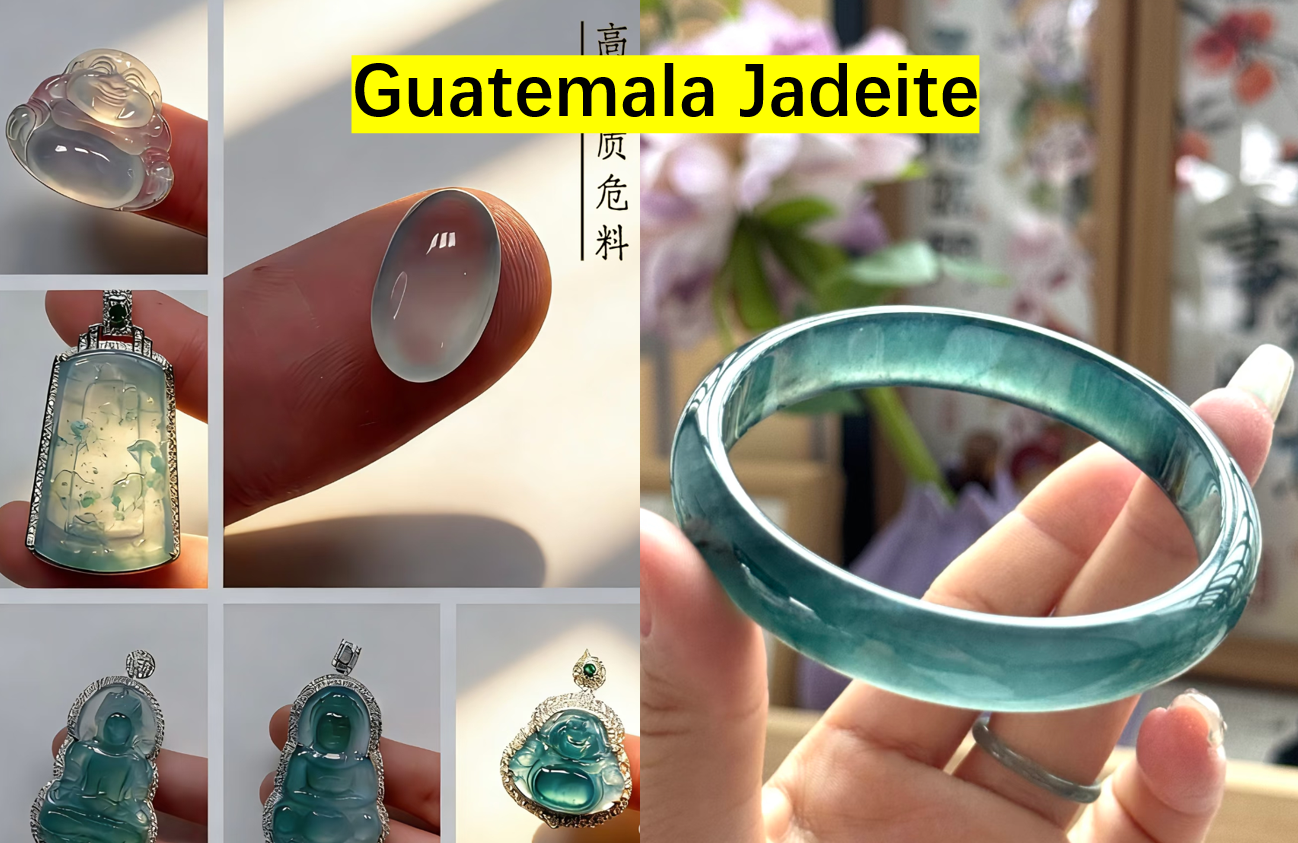
Burmese jadeite can maintain strong color and light performance when cut thicker. The color stays stable, and the stone still feels “alive” from within. Guatemala jadeite is very sensitive to thickness. When the material is cut thicker, the color and light performance become less consistent, and the stone can start to look heavier and less lively.
Because of this, Guatemala jade is usually cut thin to enhance its color and glow. It is relatively rare to see thick Guatemala jadeite cabochons that perform strongly under natural daylight.
4. Crystal Structure: Fine vs. Grainy
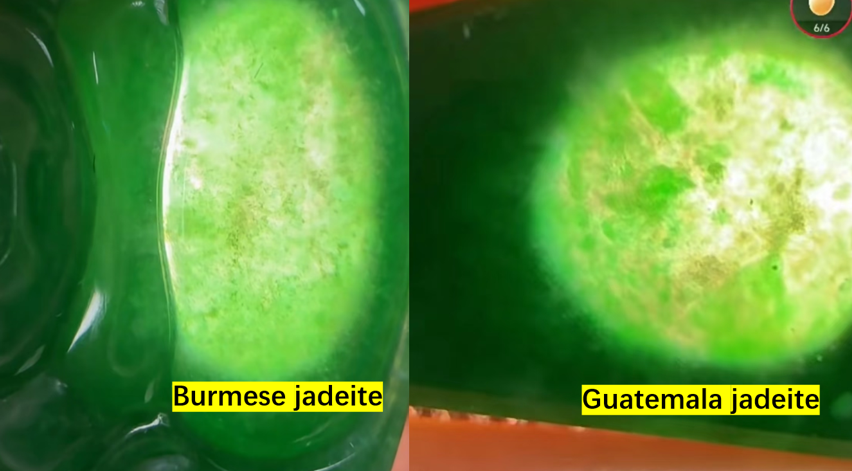
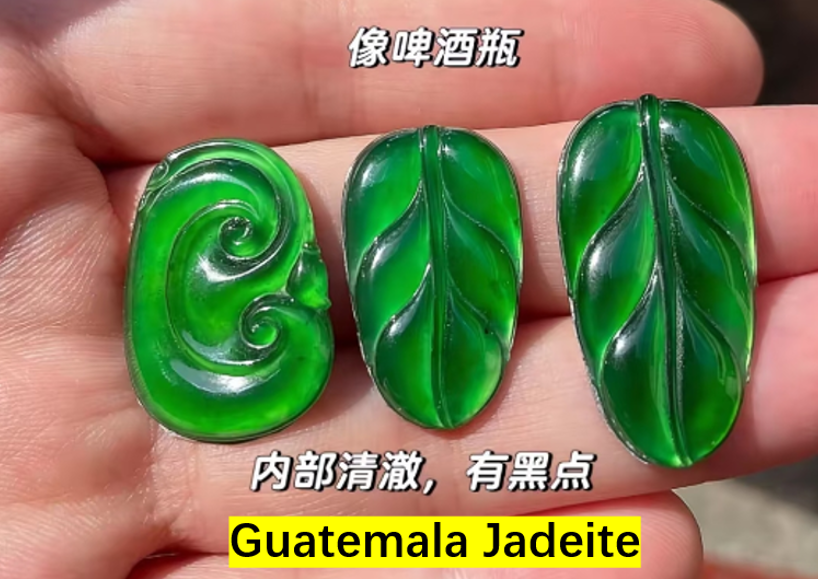
Burmese jadeite (especially “old mine” material) often has a very fine, compact structure. Even under magnification, the texture appears smooth and tight. Guatemala jadeite tends to have a coarser, more visible grain. Under a loupe, you may see crystal boundaries or a slightly “sandy” texture.
5. Clarity and Inclusions: Soft vs. Distinct
Both Burmese and Guatemala jadeite contain natural inclusions, but their appearance and integration within the structure differ.
Burmese jadeite often displays soft, mist-like “cotton” (棉) that blends naturally into the stone’s internal structure. In contrast, Guatemala jadeite more commonly shows patchy or clustered inclusions, as well as darker spots, which can appear more abrupt and less integrated.
6. Color Distribution: Blended vs. Segmented
In high-quality Burmese jadeite, color typically transitions smoothly into the base. Even in “floating flower” jade (飘花), the color boundaries tend to appear soft and organic, with a more natural, flowing integration.
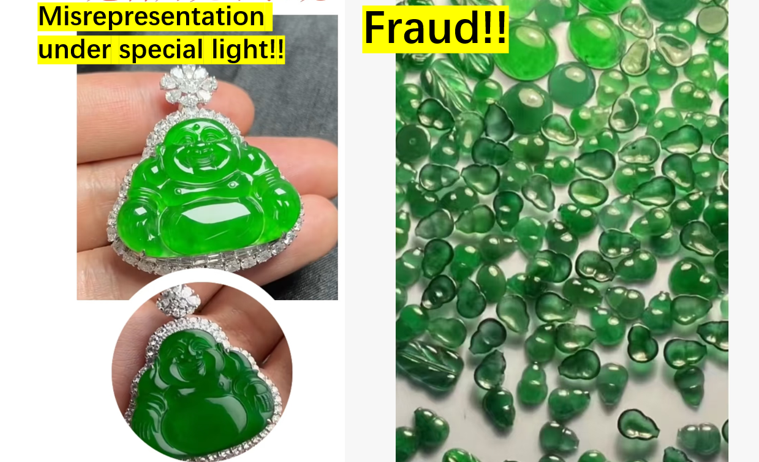
Guatemala jadeite, by contrast, more often shows less uniform color distribution. Green areas may appear in more defined patches or bands, and the transitions between colored and non-colored areas can look distinct.