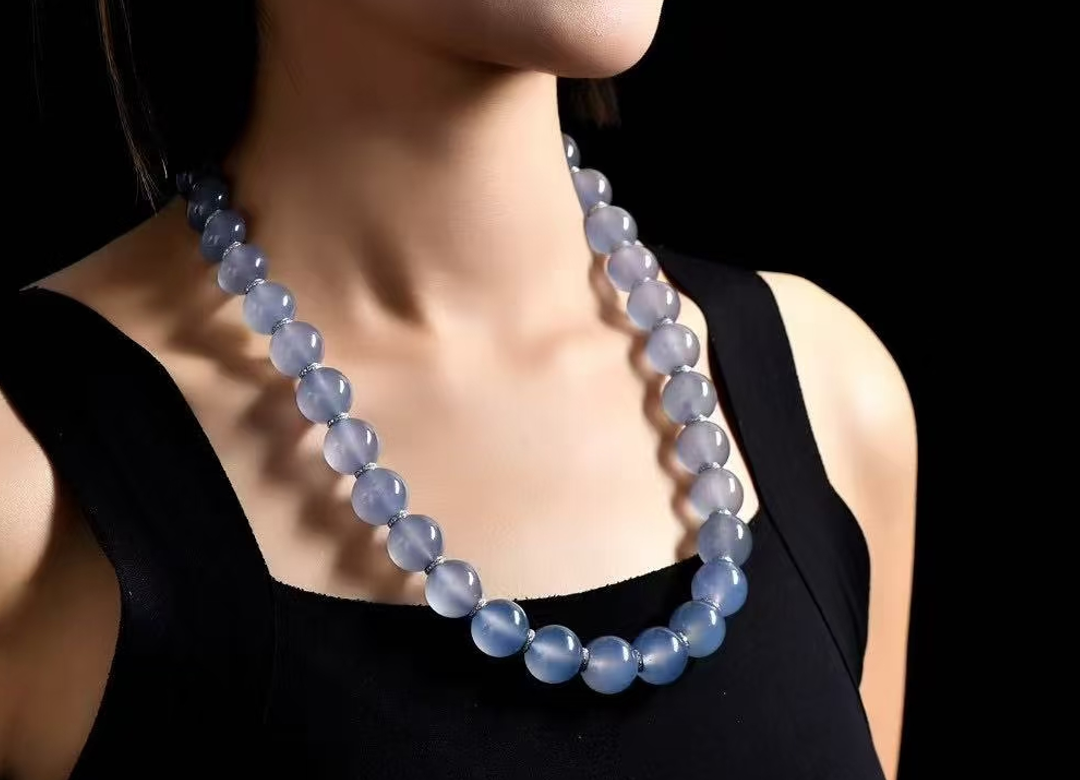
Among all jadeite jewelry, jadeite beads are the most versatile—and for many collectors, the most enjoyable. They can be collected one by one, combined in different ways, and redesigned over time. No other form of jade offers this level of personal expression. They look simple, round, smooth, minimalist. Yet behind this simplicity lies one of the most demanding and luxurious forms of jadeite.
In the jadeite world, there is a famous saying: “High-quality jade is rarely used to make beads.” This saying reflects an important truth: creating a beautiful jadeite bead necklace or jadeite bead bracelet requires a huge amount of jade material and extremely high-quality raw stone. Because of this, fine jadeite beads have become some of the most respected treasures among serious jade collectors.
Why Jadeite Beads Require So Much Jade Material
Among all jadeite jewelry types (jade bangles, jade cabochons, jade pendants, and jade carvings), beads require the most raw material.
When carving a pendant, artisans can follow the natural shape of the jade and avoid flaws. When making a jadeite cabochon, only a small section of the best material is required. But jadeite beads are different. Each bead must be carved from a solid piece of jadeite in order to form a perfect sphere. For example: A high-quality 18-bead jadeite bracelet requires a lot more raw jade material than a jade pendant or even a jade bangle of similar weight. Beads are also extremely strict about cracks. A pendant may hide imperfections through carving. A bead cannot hide anything. If a crack appears during cutting, the bead becomes unusable.
This is why high-quality jadeite bead bracelets and necklaces are extremely rare. Most jade bead bracelets available on the market today are made from lighter colored jadeite or lower-grade material. Very occasionally, higher-quality beads appear, but they are usually small — often under 7mm in diameter. Large high-quality jadeite beads are extremely hard to obtain and are mostly in wealthy collectors’ hands.
Jadeite Bead Necklaces: The Ultimate Treasure for Jade Collectors
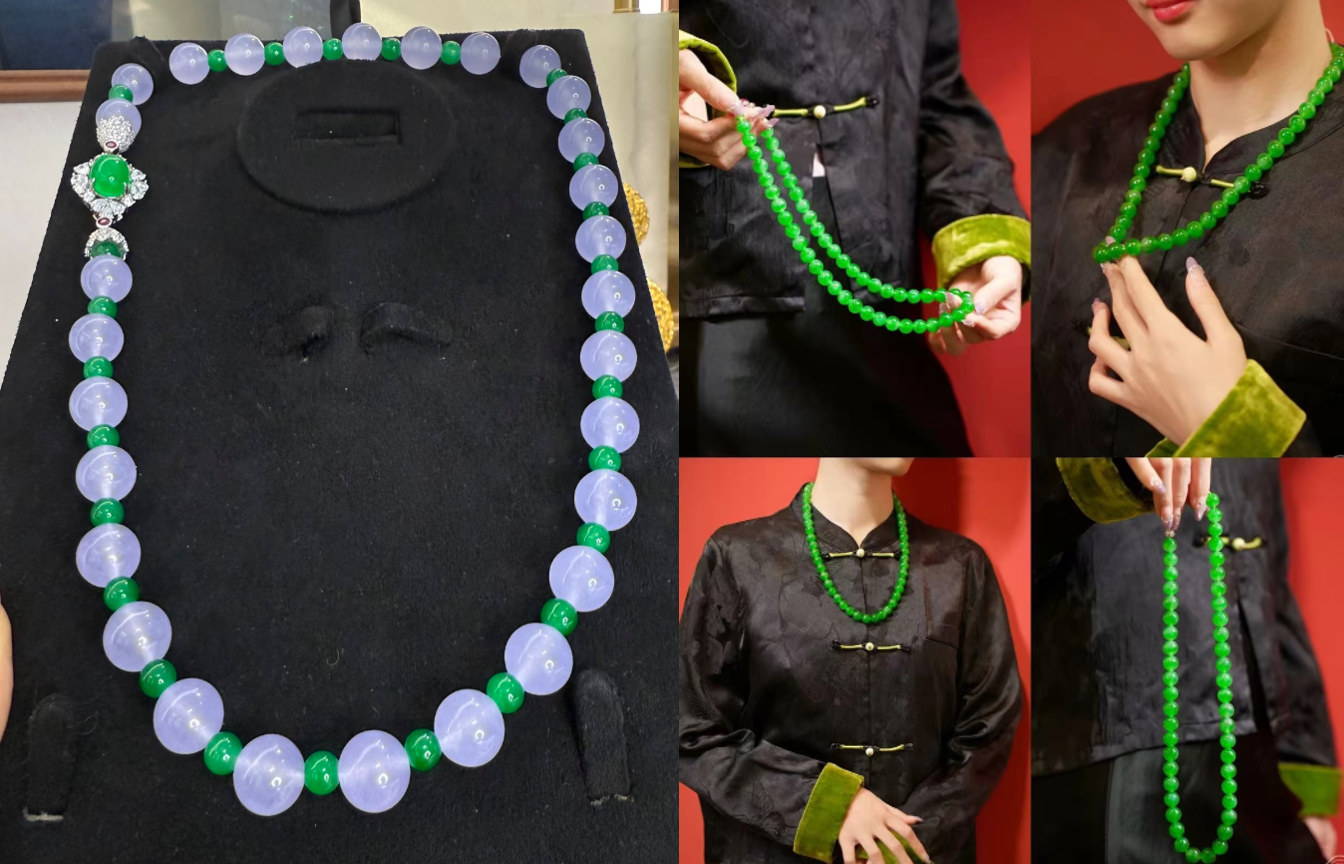
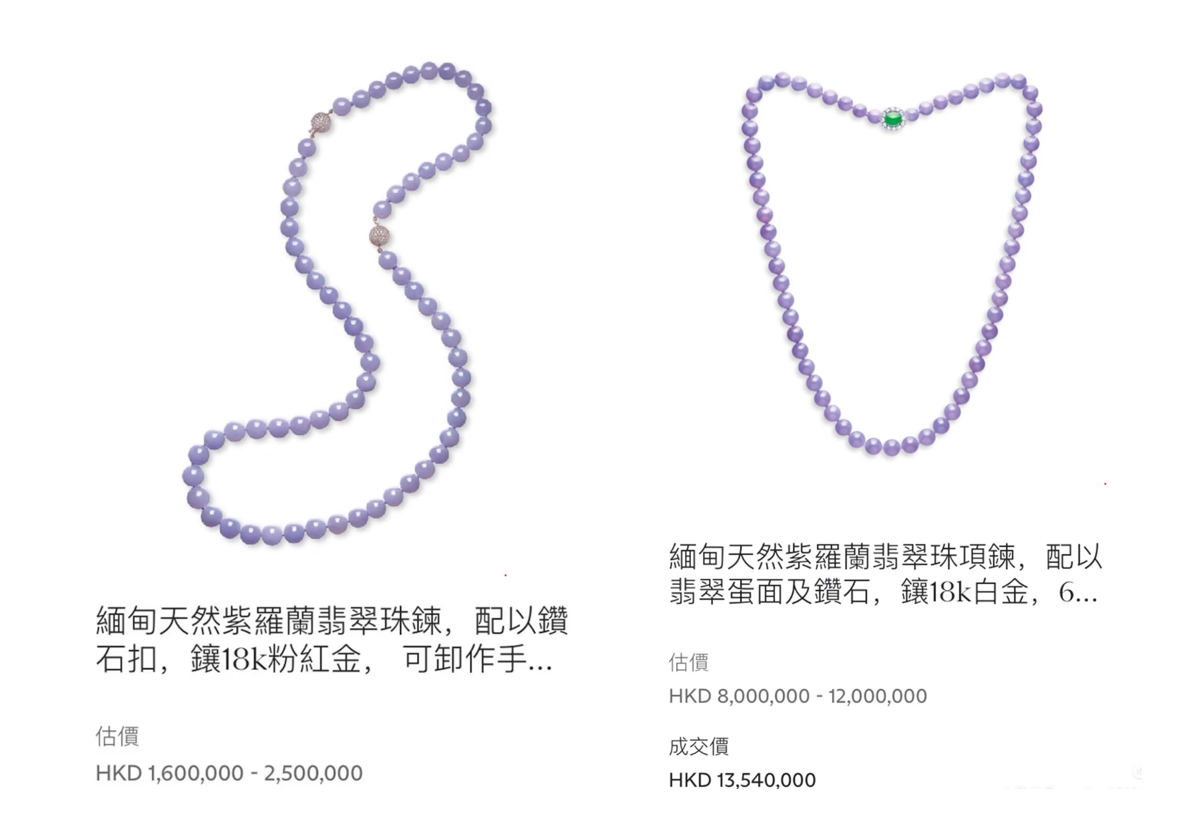
At international auctions, jadeite bead necklaces are often the most valuable jade jewelry pieces. One famous example occurred in Hong Kong. In 2014, a natural jadeite bead necklace sold for HKD 214 millions, setting a record for jade jewelry. The necklace contained 27 perfectly matched Burmese jadeite beads, each approximately 15mm in diameter. They were cut from the same jadeite rough stone, all beads from one same raw stone, having the same color, transparency, texture and quality.
Why are jadeite bead necklaces so valuable? Because assembling one is extraordinarily difficult and expensive. First, you must discover a large piece of high-quality natural jadeite with excellent grain and glow, attractive color, minimal impurities, no structural cracks. Then the jade must be cut into dozens of perfectly round beads. Each bead must be symmetrical, flawless, consistent in color, identical in size. This rarity makes jadeite bead necklaces one of the most desirable pieces in the world of jade collecting.
How Experts Evaluate Jadeite Beads
Experienced collectors evaluate jadeite beads and jade bead bracelets based on several key factors.
1. Jadeite Quality: Color, Transparency, and Purity
Like jade cabochons, jadeite beads have smooth surfaces without carving. This means the jade itself must be naturally beautiful. And like any other jadeite category, beads have the same evaluation standard in terms of quality.
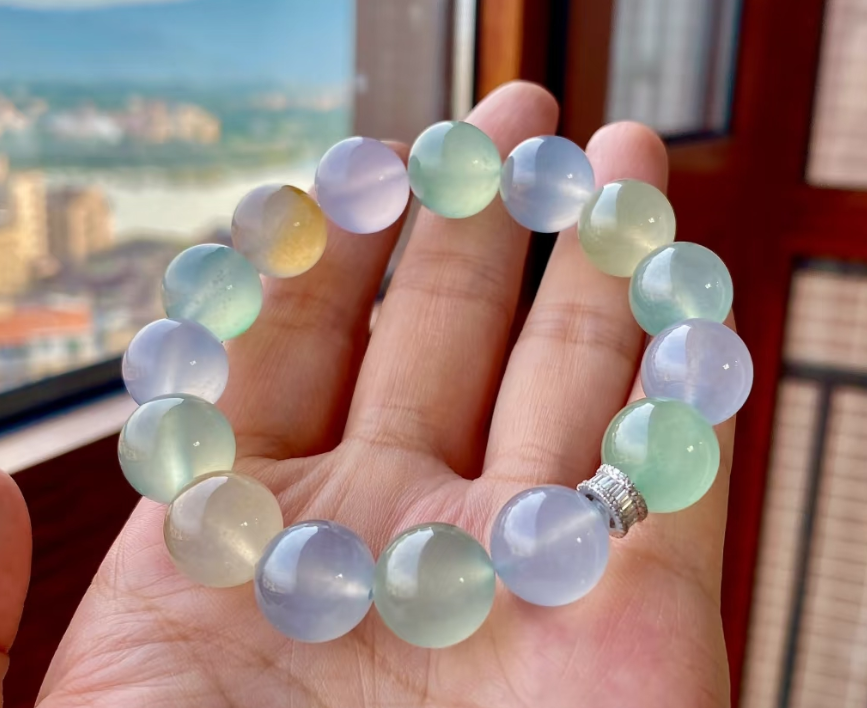
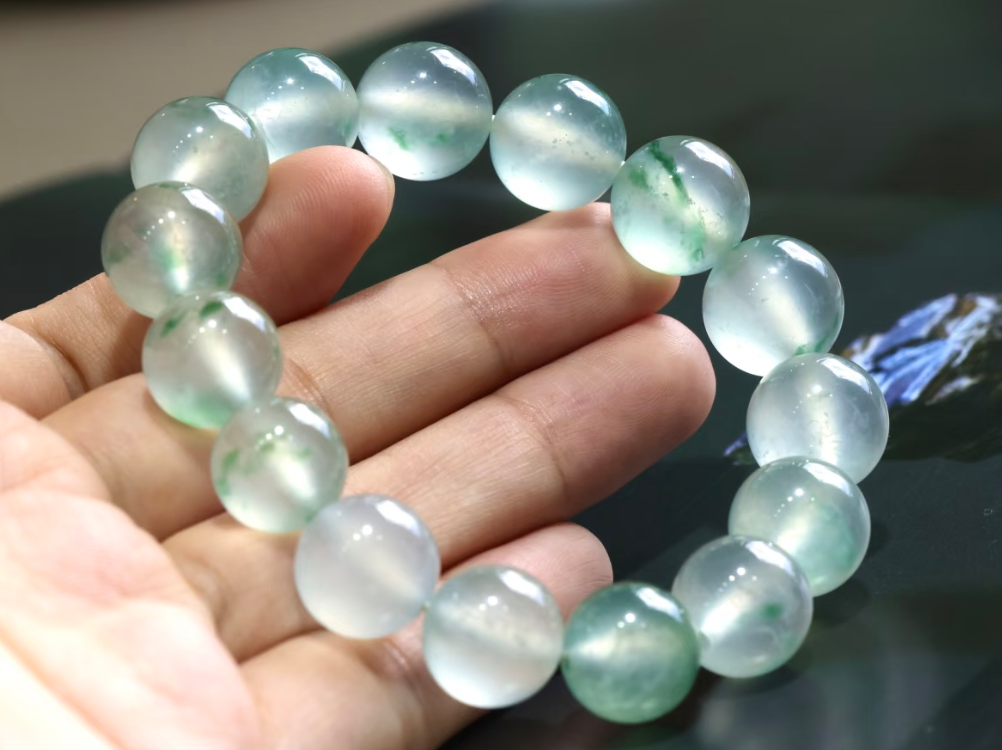
Color: For jadeite bead necklaces or bracelets, while senior collectors prefer bright or intense color, they also look for consistency in color or how the beads match with each other as a whole. Whether the beads are imperial green jadeite, lavender jadeite, bright yellow or red, icy white jadeite, floating green jade, or blue hue jadeite, the entire necklace or bracelet should feel visually harmonious and beautiful.
Transparency (grain and glow): beads with higher grain and glow are far more expensive. Wealthy collectors prefer ice-type or even glass-type jadeite beads, appearing luminous and clear like frozen water droplets, with beautiful light and glow. Lower-quality jadeite beads appear cloudy or dull.
Purity and flaws: Like we mentioned many times, there is never a perfectly looking natural jadeite piece, and it is the same for beads. When choosing beads for collection, the standard is each bead is clean enough and there is no cracks or visible flaws under human eyes. Seasoned collectors will not expect a bead to be as clean as jadeite cabochons.
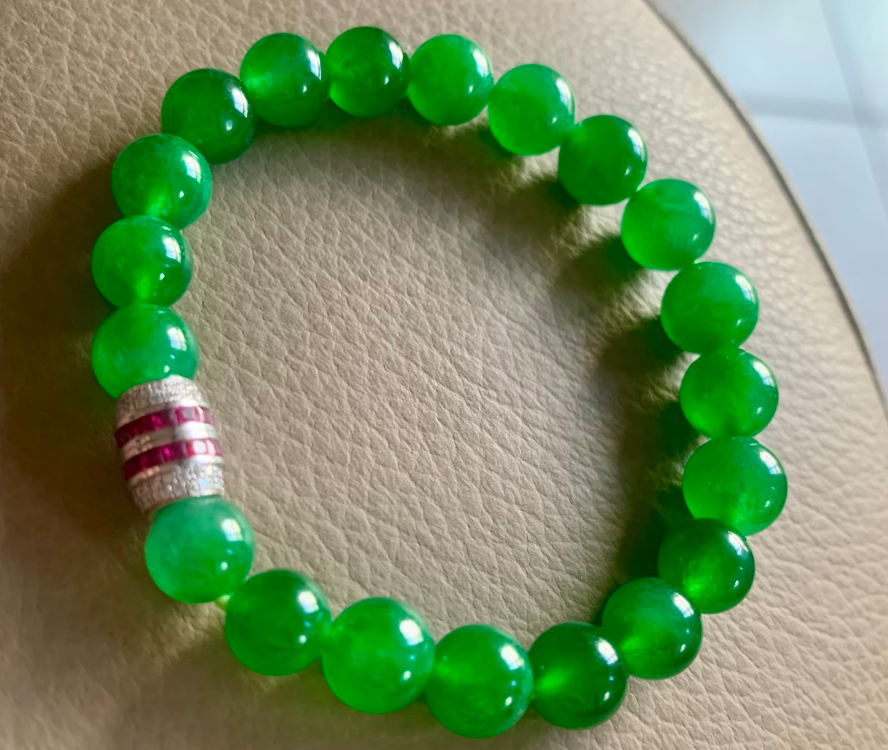
2. Structural Integrity: Same or Similar Material
The best jadeite bead necklaces or bracelets are cut from a single jade stone. This ensures consistency in color, transparency, and texture. If beads come from different stones, subtle differences become visible. For rainbow bracelets, where collectors collect beads of different colors one by one, the transparency and texture should be similar so it looks harmonious and with smooth visual flow when made into one bracelet.
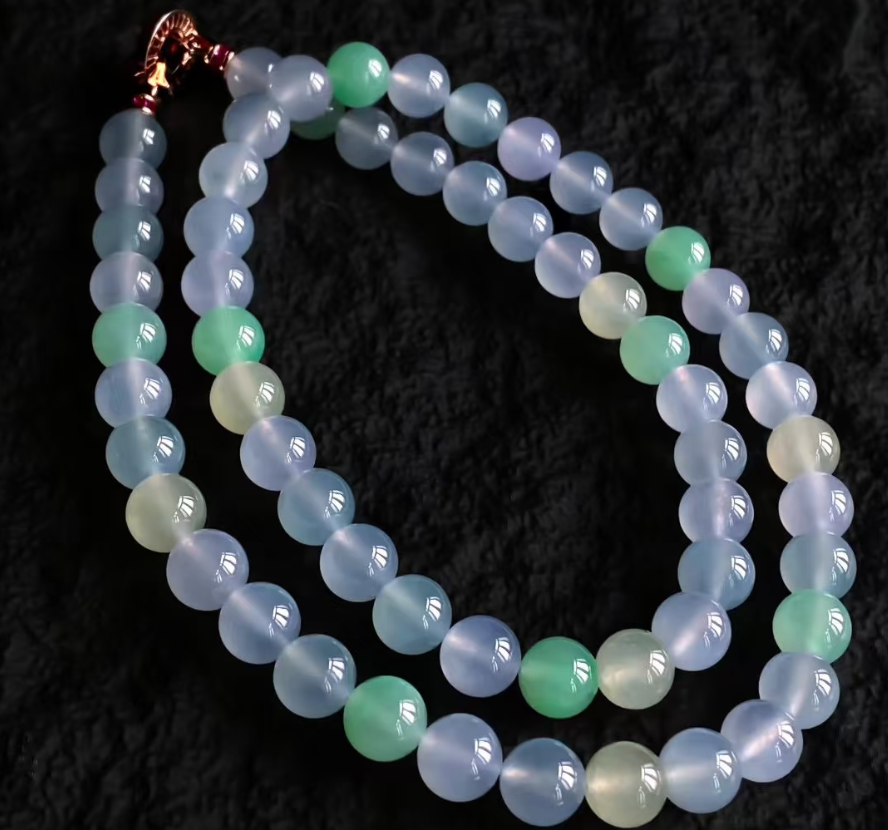
3. Shape and Size
The most classic and valuable bead shape is the perfect round jade bead. A true round bead must be symmetrical in every direction. If the bead becomes slightly oval or flattened, its value drops. Other shapes also appear in jade bead jewelry, such as barrel beads, old-style beads and abacus beads. However, perfectly round beads remain the most traditional and valuable.
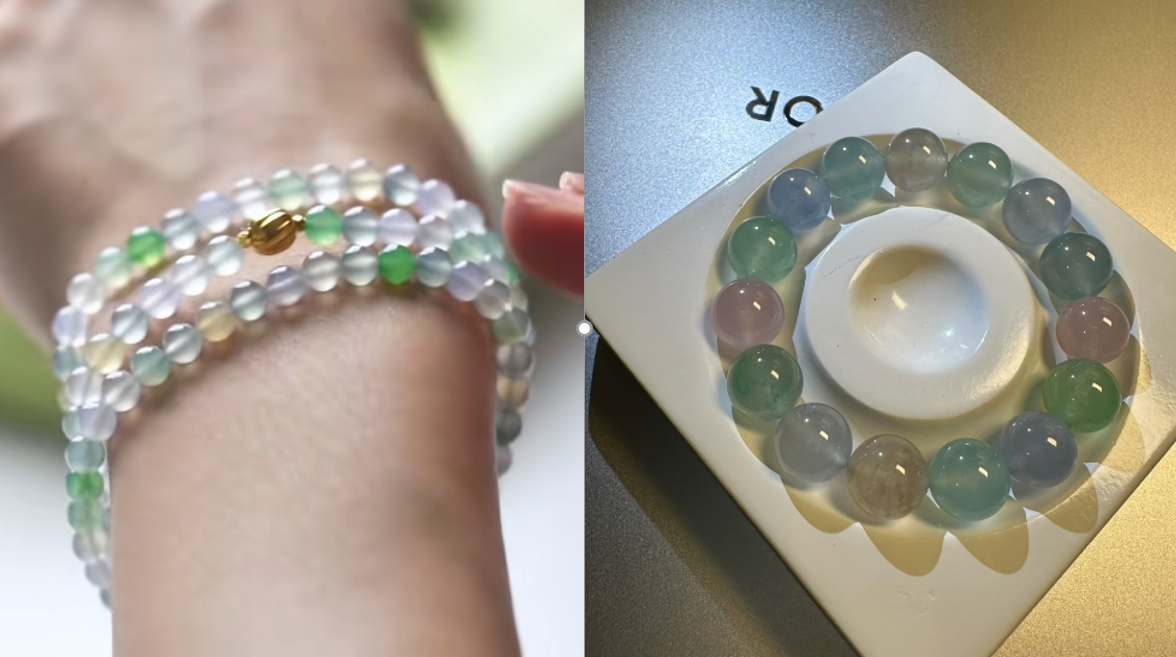
The size of jadeite beads is a very important factor that decides value – the bigger, the more valuable. Usually, bead size ranges from 3mm to over 20mm in diameter. Bead value does not increase proportionally with size. A 10mm jadeite bead may cost ten times more than a 5mm bead. This is because larger flawless beads require significantly larger jade rough of high quality. In the jade market, typical sizes include:
Micro beads (3–4mm)Used for delicate necklaces or layered bracelets.
Small beads (5–7mm)Common for jade bead bracelets and prayer beads.
Medium beads (8–12mm)Classic size for jadeite bead necklaces.
Large beads (13–16mm)Much rarer and more visually striking, mostly for wealthy collection.
Extra-large beads (18mm and above)Extremely rare collector pieces, only for single bead collection.
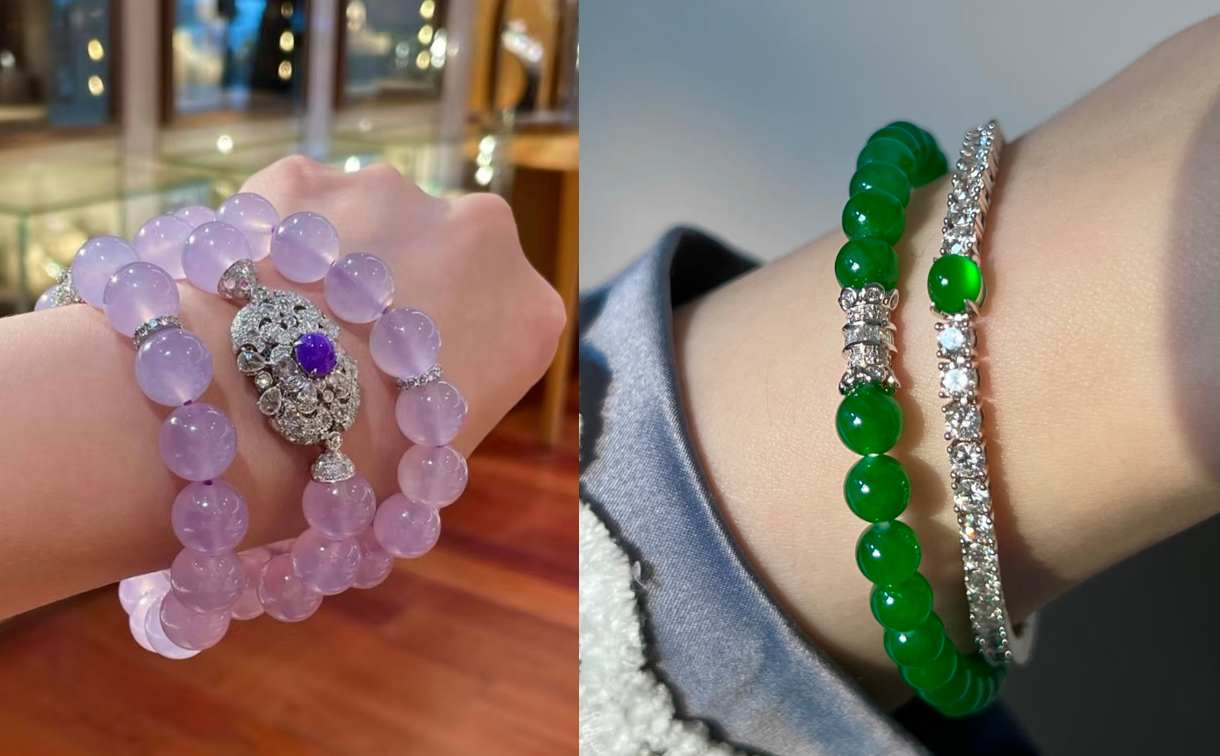
Different Ways to Enjoy Jadeite Beads
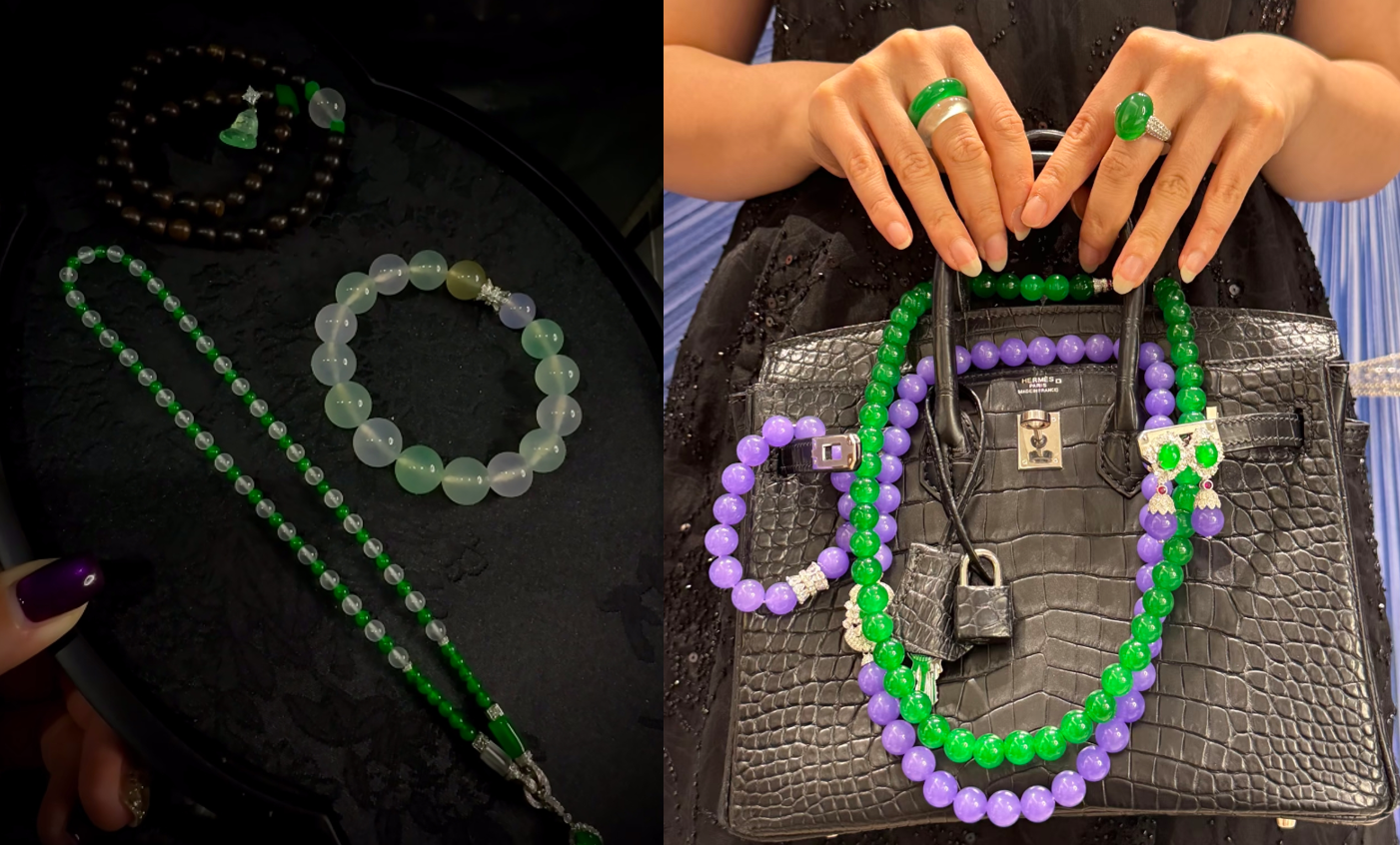
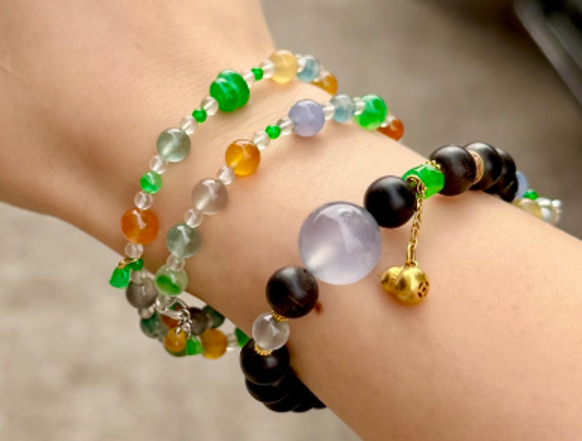
One reason collectors love jadeite beads is their versatility – beads are the most playful category in jade collection. Some collectors slowly gather individual beads and eventually create their own jade bead bracelet. Others combine jadeite beads with decoration materials such as agarwood, amber, coral, lapis lazuli, and gold.
Younger collectors often enjoy colorful multi-color jade bead bracelets, sometimes called “rainbow” or “macaron-style” bracelets. Traditional collectors also appreciate 108-bead jade prayer necklaces, combining spiritual meaning with elegant design.
The Most Collectible Jadeite Beads
Several types of jadeite bead necklaces are especially prized by collectors.
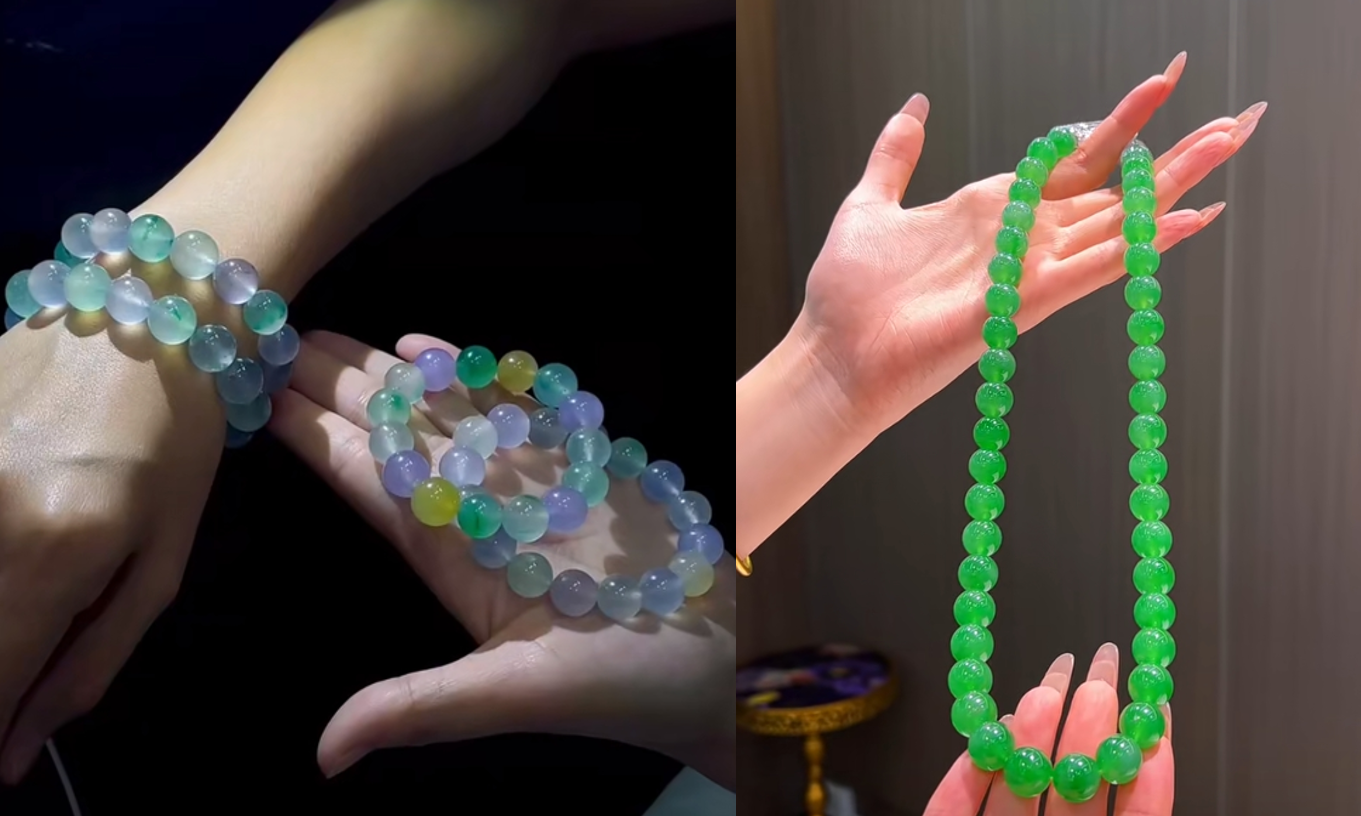
Glass-Type Jadeite BeadsClear and luminous beads that resemble droplets of water.
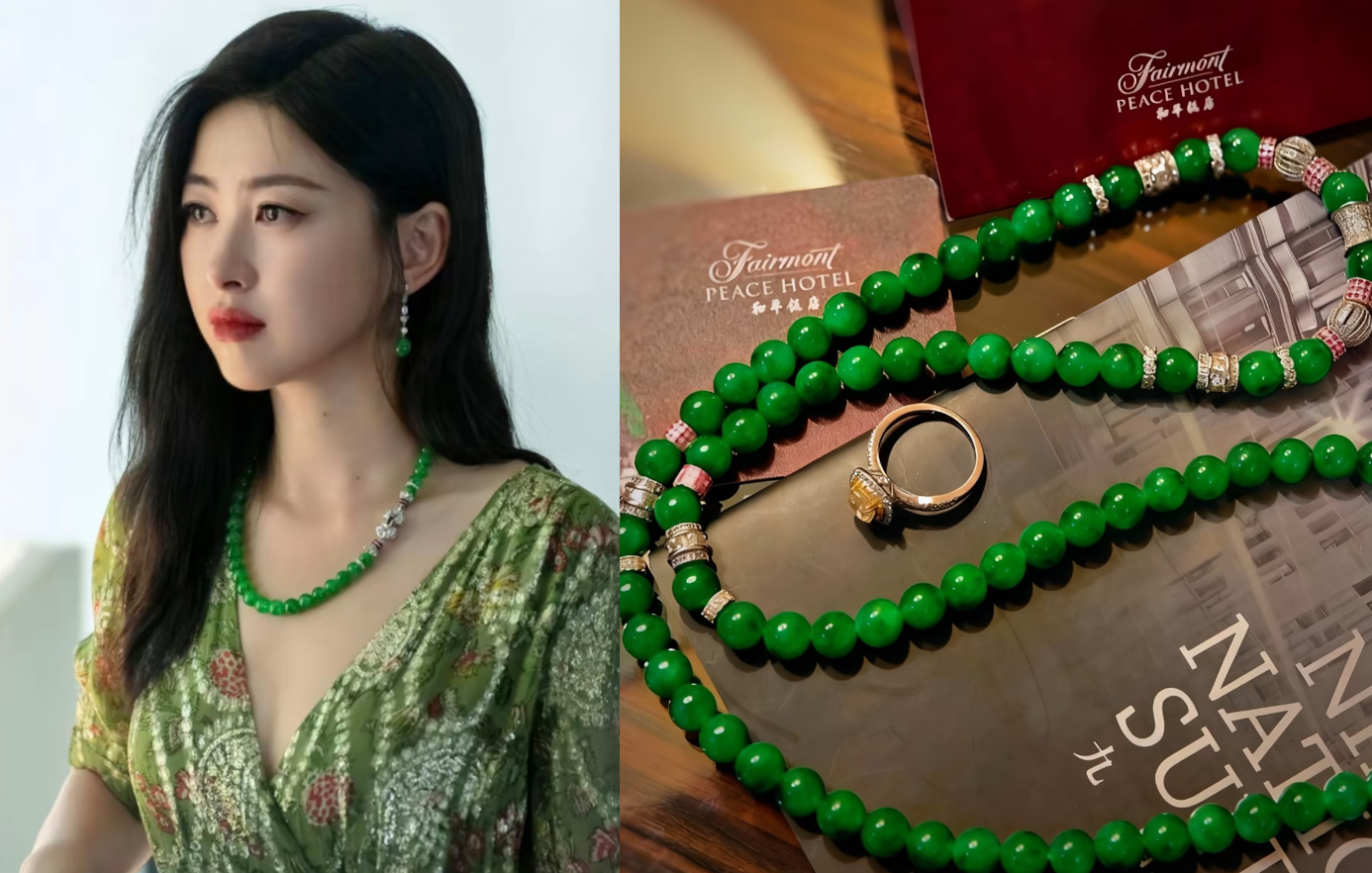
Imperial Green Jadeite BeadsUniform emerald-green beads remain among the most valuable jade treasures.
Lavender Jadeite BeadsSoft purple jadeite with good transparency is increasingly rare and collectible. Or bright and intense purple jadeite with good grain and glow is also preferred by top colloctors.
Hermit Jade: Serving Global Jade Collectors
In the jade world, one rule always applies: The seller matters as much as the jade itself. At Hermit Jade, we specialize in sourcing natural jadeite jewelry and rare jadeite beads for collectors around the world - untreated Type A natural jadeite ONLY. Our experts work through top channels to identify exceptional jade and carefully select pieces with outstanding quality.
For serious collectors, we also provide VIP sourcing services, helping clients locate rare jadeite beads or cabochons that rarely appear on the open market. Many collectors trust our expert eye to help them discover the jade they have been searching for.
Hermit Jade also welcomes collectors to visit China for a jade discovery journey. During these visits, our experts guide collectors through jade markets and help them understand how natural jadeite is evaluated. For many collectors, this experience becomes the beginning of a deeper passion for jade.
Jade Collectors in the Middle East
Interest in natural jadeite jewelry is growing rapidly in the Middle East, especially among collectors who appreciate rare gemstones and cultural heritage.
Hermit Jade will soon open a store in Dubai, UAE, where collectors can experience high-quality jadeite jewelry in person. Seeing jade with your own eyes and have the chance to compare is the best way to learn and understand its beauty. Visitors will be able to compare jadeite rings, jade earrings, jade cabochons, and jadeite bead necklaces side by side.
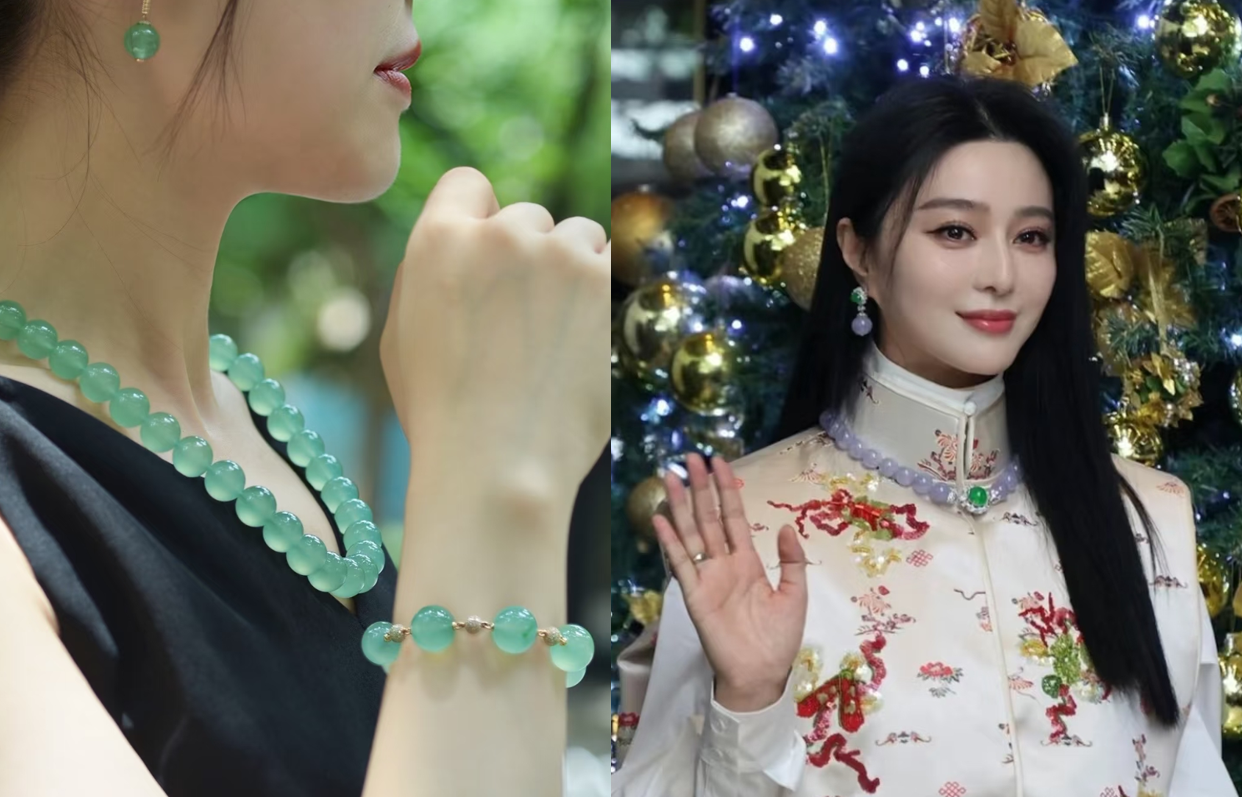
(Poem To Enjoy!)
The Quiet Luxury of Jadeite Beads
Jadeite beads represent a unique form of luxury.
They are not as bold as jade bangles.
Not as flashy as jade cabochon rings.
Not as symbolic as carved jade pendants.
Instead, they sit quietly together — bead after bead — around the wrist or the neck.
Elegant.Balanced.Timeless.
A beautiful jadeite bead bracelet is often the one you want to wear every day.
Not because of its price, but because it brings a quiet sense of satisfaction.
And when you explore deeper, you will discover that the world of jadeite beads is vast — from simple bracelets to museum-level necklaces worth billions.
Because in jade collecting, the greatest joy is not only in value.
It is in the journey of discovery.